The Power of a Challenge

Every now and again I like to self-prescribe a running challenge that takes me out of my ordinary day-to-day and pushes me out my comfort zone.

My wife thinks I’m nuts and I definitely don’t disagree. To my defense, I’m not even close to the caliber of crazy that some of my running friends are. I’m just trying to keep up most times. 😊

I just completed my latest challenge this past weekend.

The Black Mountain Challenge

The Mountain

Black Mountain is my local go-to trail in the Las Vegas Valley. It’s the most prominent peak on the south side of Henderson (look southeast from The Strip), standing at about 5,092 feet. Starting at the Shadow Canyon Access Point parking lot, the round trip distance is about 7 miles with a climb of about 2,000 feet.

My Black Mountain Art. You can find more illustrations in ā€œMy Art Portfolioā€ in the Menu.

The Goals and Milestones

A seven week challenge. The goal was to summit Black Mountain once in the first week and by week seven, summit the dang thing seven times in a week!

It looked like this upon completion:

I suitably named the challenge, “The Black Mountain Challenge”. Original, right?! šŸ˜‚

The Experience

Needless to say, this challenge was a big undertaking. I certainly had my share of ups and downs, but that was completely expected. Whenever you face a challenge that helps you grow mentally and physically, you have to expect the unexpected and embrace the fact that things won’t always feel and be easy.

Ultimately, I successfully finished the challenge and that ALWAYS feels good, but it’s the lessons learned and the memories that resurfaced that’s the reason behind WHY I do these challenges in the first place.

If you’re interested, check out my runs and photos (and follow me) on Strava!

The Lessons

It was during this challenge that I originally came up with the idea to integrate my passion for art and running with my experiences in life and business. I collected a significant number of thoughts along the way and I’m excited to share my stories and reflections with you in the days and weeks to come!

For now, here are my ten key takeaways from The Black Mountain Challenge.

1. Commit, Then Show Up

Getting started is often the hardest part, but committing and showing up at the starting line is the half the battle. You have to trust the process and know that your preparation, hard work, determination and grit won’t fail to push you past your ordinary self.

2. Doing Is Better Than Not Doing

“Deciding” and “Planning” is very different from “Doing”. “Doing” is what separates you from everyone else.

3. Have Gratitude For The Journey

Achieving a goal and seeing results is amazing, but it’s the journey that is everything and it’s the journey that we should always remember most.

4. Look At Old Things With New Eyes

Just because you’ve seen or done something a million times, doesn’t mean there isn’t room to see that somethin’ somethin’ from a new or different perspective. Seeing something with your eyes is far different from seeing something with your mind.

5. Compartmentalize Your Thoughts & Activities

Compartmentalizing is a valuable tool in every aspect of life. You’ll be a lot more successful if you break things down into bite-sized morsels and completing them as you go than you’ll be trying to think about, or accomplish, everything all at once.

6. Be Comfortable With The Uncomfortable

Learning to be comfortable with the uncomfortable will give you a jumpstart to overcome any challenge. It’s all about mindset. Life isn’t gonna throw you a bunch of gimmes you can hit out of the park every time. To grow, you need to challenge yourself and falling flat on your face every now and again is part of the path forward.

7. Celebrate The Small Wins

Completing small next actions lead to small wins. A collection of small wins helps build the momentum you need to create bigger and more meaningful wins. Make sure you take the time to celebrate the small wins and never, ever forget to have fun along the way.

8. Take Care Of Yourself

Self-care is vital, especially if you’re doing something difficult and worth doing. Make sure you prioritize feeding and resting both your body and mind. Sometimes this simple act requires a little more effort.

9. Go The Extra Mile

Going the extra mile is a key differentiator. Over-delivering speaks volumes about who you are, what you’re willing to do to deliver, and what you’re capable of doing.

10. Don’t Forget The Importance Of Community

There are a lot of people cheering you on and want to see you succeed, just as there is always someone there when you need help or support. You’ll be amazed how much a simple smile or a thumb’s up on social media means to someone. Remember, it goes both ways. 😊

I’m looking forward to sharing my reflections about each points in future blogs.

As always, thank you for sharing the journey with me.

Gratitude. šŸ™

cp

Finally Taking The Leap

Friends and colleagues, for years, have been telling me I should write a book. In the career I stepped away from, communication, specifically writing internal blogs and company-wide emails was a vital part of my responsibilities. For the longest time, however, I shied away from writing for a public audience for a ridiculous reason – the fear of rejection and the feeling that I just wasn’t good enough. Just a few days ago, I faced this fear head on. While I’m not writing a book any time soon, I decided that I needed to start somewhere. That somewhere is this blog.

The Backstory

Just a few weeks back, I had the idea to integrate the love I have for running with the passion I have for art. I excitedly created a few vintage illustrations of Las Vegas Valley trails I enjoy. It turned out to be a really great decision. Not only have a connected back to my art in a meaningful way, but the integration of the two has helped me connect with myself on a deeper level, helping me see new perspectives I wasn’t necessarily tapping into before.

In retrospect of my three months away from work, I illustrated the things I felt I connected with on a deeper level. The flowers represent my three kids and my wife, while the five hearts in the upper left-hand corner is family itself. Everything else, i think is self-explanatory 😊

Soon after those early creations, on a run of course, I had another idea…

What if, through the lens of a runner and artist, I created the opportunity to share as many reflections, learnings, and experiences from my life and work as I could?

What if I was able to offer leaders fresh perspectives on doing business? What if I could better prepare them for the future of work, where business will undoubtedly become harder and more complex?

What if I could help people raise the bar in their workplaces or workspaces? What if I could I inspire them to become better versions of themselves, both at work and in their personal lives?

What if I could help companies create better, more human-focused and customer-obsessed organizations?

What if I just started to do something about it instead of just thinking or talking about it?

I’m not exactly sure if this will end up being a good idea in the long-term, especially since there are already so many resources companies and leaders can tap into, but I couldn’t resist moving my idea and unique perspectives forward. At the very least, I would be happy with having a pretty damn good archive of experiences and who knows? Maybe I will eventually write/illustrate that book and maybe, just maybe, help a person or two along the way.

Thank you for being here and being one of the first to support me in this new journey. I hit ā€œpublishā€ on my own public-facing blog for the first time ever and it wasn’t nearly as bad as I thought it was going to be. 😊

Gratitude. šŸ™

Check out ā€œMy Whyā€ to learn more about this idea and my motivations behind it.

cp

I’m Proud of My Boy

A little over four years ago, I read an eloquent letter written by my 12 year-old kid explaining, with great detail, how it felt to be stuck inside a body he didn’t identify with.

Mind, heart and soul, he was a boy.

However, how much of the world treated him, what his family saw him as, and what he saw in the mirror – he was a girl.

For years, I had known deep inside that he was struggling with identity issues, but never grasped just how much he was really struggling until reading this letter.

It was always easy to dismiss any feelings I was having…

ā€œIt’s cool. He’s a tom-boy.ā€

ā€œIt’s just a childhood phase. That’s what kids do, right?!ā€

ā€œHe’s just going through some pre-teen hormonal changes and this is totally normal.ā€

But this was deeper. Way deeper.

I have always tried to be a great dad, but felt like I had failed miserably because this note revealed that he was battliing to express even the simple things about how he was feeling – anything about what he was going through with us, his parents. I questioned my parenting skills and contemplated whether or not I was truly creating a safe space for my children, for my family.

I soon came to realize what a huge boulder it was for him to push and how difficult it truly was for him to talk about it.  It was a risk and for many transgender kids, taking that risk comes with great consequences. 

There’s no parenting playbooks for this kind of stuff, but my main goal quickly became to actively listen and understand as much as I could. And even though I loved him unconditionally prior, I had to step up and show my support and love even more than I had in the past.

Like Father, Like Son 😊

Coming back to this memory recently, I remember my mindset changing drastically in the most positive of ways. I redefined what it meant to be curious, empathetic, and supportive. I connected with people, especially my son, in ways I never did before. It helped me become a better version of myself in every part of my life – personally and professionally.

  • I went to workshops at The Center (Dowtown Las Vegas) to learn more about how I can be a better parent and LGBT+ advocate
  • I did my own research to learn more about how I can help support my son through his ups and downs
  • I asked more questions, but didn’t pry too much, or make him feel uncomfortable when he didn’t want to talk about it
  • I supported him in paths he wanted to take to promote awareness and understanding of the challenges he was feeling
  • I was real with him when I needed to be, especially about being patient and pushing him to fight for what he believed in – nothing was going to be easy about his path forward

In a matter of days and weeks, I also saw what the journey was doing for him: 

  • He was feeling like he was part of something bigger than himself
  • His confidence and courage was elevated and he started taking a stand for the things he believed in
  • He started caring less about what people thought about him and started focusing more on what he and the more important figures in his life thought
  • His relationships with his friends and family got better
  • He did his own research and learned more about LGBTQ history and various influencers that have changed life as we know it
  • His activism, specifically through his art and voice is changing people’s lives directly and indirectly

Together, we went on many learning and experiential journeys

  • We went on an epic road trip to San Francisco Pride and celebrated him, together. We celebrated Pride here in Downtown Las Vegas
  • We made ourselves part of my company’s LGBT+ awareness campaigns, including me dressing in drag as Freddie Mercury in the ā€œI Want To Break Freeā€ video
  • We have more candid and collaborative conversations; we trust each other with information and feedback pertaining to the constraints we both feel (even when it’s hard)
  • We are both taking baby-steps to get to a better place; helping those around us break down their own barriers in awareness, understanding, and acceptance

At the end of March this year, he came out to the world via a post on Instagram. He not only came out as transgender, but also as a valuable agent of change and meaningful transformation in the LGBT and Asian Communities.

I couldn’t have been more proud of him, not only for sharing with the world who he is and his life-long struggles in being trans, but evolving to a whole new level of consciousness; translating the good and the bad he’s seeing in the world into words and art.  And with that, he’s making an authentic and powerful impact on the world, especially for LGBT+ youth and our communities who continuously fight against mindsets and actions of hate.

With all the good that has come from this journey, it doesn’t mean, by any means, that things are perfect. The struggle is real. For both of us, but especially him.

  • I see him struggle with things every day that most of us will never have to struggle with EVER. In particular, most of us will never know what it’s truly like to be stuck inside a body you don’t identify with at all; what it’s like to have to play a fictitious character in everyday life, one that isn’t, or will ever be, your true self
  • I see him battle every day with the hate that minorities face in the world, especially in our Asian, Black and Transgender communities; events that have negatively impacted people and families for generations without major improvement and/or resolve. While some things have changed for the better, there is so much that has moved backwards
  • I see him have to convince others of who he is, what his name is, what his beliefs are, and how he sees the world. He should always be enough and should never have to convince anyone, anywhere, anytime of who he is and the greatness that he brings to the world and to me

It all kills me inside.

Bad Asses, To The Core hahaha

While I try and support him the best I can, it’s not easy for a parent to integrate the things a transgender kid wants, needs and deserves in this world with the wants, thoughts, and actions of other people that just don’t fully understand what he, and I, are going through.

But I’m not done trying to make things better and I know he has no intentions of giving up either. He is a light and will shine bright forever. He WILL help change this world we live in and I can’t wait to see it all come to fruition.

In this month of LGBT+ Pride, I honor and celebrate my Son, Aaron.

In this month of LGBT+ Pride, I celebrate my son, Aaron. I am proud to be the father of a young man who embraces his diversity, uniqueness and strengths. A young man who is courageous and resilient; an inspiring human who continually steps up in the wake of adversity and constraint.  He’s a young man who is actively shaping the world around him, driving awareness to so many important social matters.  He teaches me something new every single day, but his efforts extend well beyond me.  He’s actively pursuing a goal to bridge the gaps between where we are and where we could be as a society – a place where understanding and acceptance is created from open-mindedness, empathy and compassion, so that EVERY person can be accepted and loved for who they authentically are.

I love you, Aaron. I am so honored to call you my boy.

Happy Pride Month.

The Story Behind Speed Demon Money

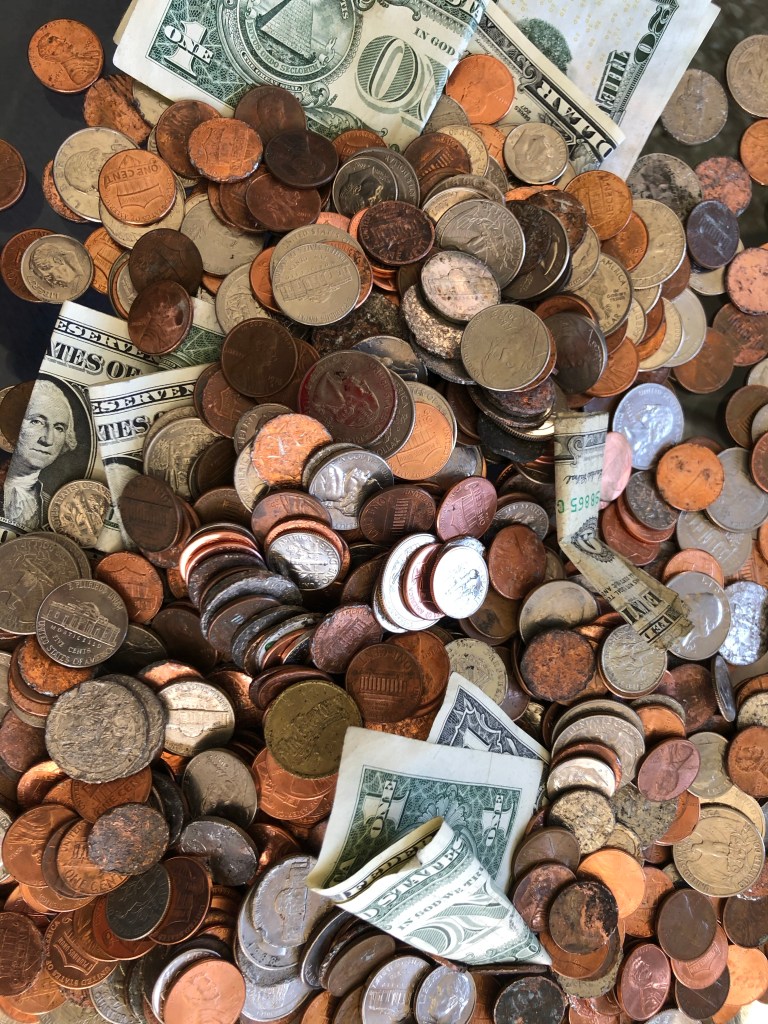
Picking up deserted coins on the street has become one of my favorite running pastimes. The first time I remember, I was running home from work in San Francisco when I came across a small fortune – roughly $2 in change scattered over a street corner gutter, all of which probably dropped out of some poor chap’s pocket as he went to sit down in the passenger seat of his buddy’s car.

Picking up coins has become as fun to me as the runs themselves

I remember the biggest smile stretching across my face because I just made $2 for running! Organic Sponsorship… šŸ˜‚

Ever since I remember, I’ve been ā€œrunning for changeā€ | photo circa 2008

Over the years, my eyes were always peeled and on constant lookout for abandoned money.

It wasn’t until eight years ago, or so, that the act became more explicit for me.

While taking my middle kid for a run (he was seven or eight at the time), I came across a penny, stopped and picked it up. He asked me about it and I told him the story and he exclaimed, ā€œWe should put in a jar and call it speed demon money and when we fill the jar, we should give it all to charity!ā€

Just me and the boy on a night run, sometime in 2014 šŸ™‚

The name Speed Demon came from a three-mile loop around the neighborhood that he so affectionately named during our very first run together. It made sense to me, so I quickly agreed and together, we started a collection jar to house all money I would find over the next 8+ years of running.

The infamous Speed Demon Money Container

On a run, I usually don’t find sh#t. It’s not like coins rain from the sky, people. Haha. And when I do find money, it’s almost always in the form of a penny. I mean, who really takes the time to pick those up anyway (sorry, Ben Franklin). However, every now and again, I come across nickels and dimes. Once in a blue moon, I’ll pick up the very elusive quarter and even a fifty-cent piece!

The coins come in all kinds of conditions. From new and freshly tossed out of a car window or prematurely lost in the shuffle of someone pulling out their phone from their back pocket, to the ugly, dirty, torn to bits-and-pieces variety. The more beat up, the happier I seem to be. I know, it’s weird, but it’s true. The dirtier the better! šŸ™„

Some of the more ā€œbent out of shapeā€ coins in the collection…

The mother of all findings is the dollar bill.  Once every couple years, I will quite literally run into a dollar bill or two, just floating in the wind, or stuck against a wire fence or in a bush.

But something even more miraculous happened on my run yesterday. I found an Andrew Jackson! A crisp, sun-baked $20 bill that has forever redefined what success looks like on my street runs.

In the Speed Demon Money Jar you go, Andrew!

With that said, this freakin jar is almost filled up. It’s kind of amazing how things grow if you give it time, energy and deliberate commitment. Like anything is life, eh?

Seriously… Give it time and one penny becomes many, many pennies!

While I’m not patient enough to count it all at this point in time, I can tell you that I’ve collected just over 7 POUNDS of money over the years.  That seems nuts to me!!! Absolutely nuts! šŸš€

– 1 lb 10 ā…ž ounces – Jar Weight
– 8 lb 11 ā… ounces – Total Weight with Money

The official Speed Demon Money Jar

One day, I will take the time to also figure out my average per run šŸ˜‚

And as we get closer to donating (at least the identifiable money), we’ve already picked out our charities – the ones my son resonates closely with and supports on the regular.

We urge you to donate as well šŸ™‚
Color of Change: https://colorofchange.org/ and
Stop AAPI Hate: http://stopaapihate.org/

Gratitude.
cp

Happiness is Really About Four Things

On my run yesterday, I thought about my mentor and friend, Tony Hsieh and the amazing legacy he created around employee happiness in Zappos’ heyday. Born from the simple idea that ā€œhappy employees equal happy customersā€, he helped the company create an organizational culture that would eternally redefine how customers should be treated in the eCommerce world and how employees should be treated in a company.

Imagine a company that makes its employees so happy that they feel intrinsically obligated to deliver nothing but the very best customer service and experience?

Novel idea, right?!

Tony breaks it down for us in his book, Delivering Happiness:

ā€œHappiness is really just about four things: perceived control, perceived progress, connectedness (number and depth of your relationships), and vision/meaning (being part of something bigger than yourself).ā€

The next time we’re left wondering how can we can improve our happiness levels, a good first step could be to spend some time investing whether we are feeling each of these things in our lives, or not.

Let’s Explore

People are really bad at predicting what makes them happy and it turns out that it’s not as simple as just asking people either.

As for Tony’s definition of happiness, I’d love to share my reflections, based on all that I’ve experienced and learned throughout my career at Zappos.

A few caveats before moving on though…

Although these takeaways are geared toward the workplace and the leaders that create the space in which employees can deliver their best (or not), it can apply to many other places in our lives.

While Tony’s definition of happiness isn’t spot on for everyone, I feel it gets us to the starting line when thinking about what makes people happy, especially in the workplace. It gives us a good base.

It is important to keep in mind that every person and team is unique. How I define these four things may be very different from how you define them, which could be very different from someone else’s. As an example, the value that a person may put on a promotion, or a pay bump, may be just as valuable as a consistent pat on the back or public recognition to another person.

Lastly, it’s important to also think about the environment in which we’re expected to do our best work. There is a a big difference between an ideal culture, which includes the values and social norms that a company or group claims to have, versus real culture, which are the values and norms that are actually created and followed by its people. ā€œThingsā€ you get in your job don’t define ā€œthe cultureā€, the people do. For example, although a renowned benefits package and culture goes a long way for its employees (and Zappos had one of the best), the things that truly matter in the workplace are the things that those employees feel, what they care deeply about, and what they take action on. If we’re intentional about creating happiness through a great culture, we’ll see happy employees and stellar results. However, if we’re not paying attention and culture becomes an afterthought, employee happiness can very easily slip away and quickly bring the company to its knees. And for many of us, this also happens to be true for every other aspect of our lives.

Now Let’s Proceed…

Perceived Control

Authentic empowerment through trust. Communicating clear accountabilities and expectations and letting people run with it. Explicit and authentic ownership of a project or a piece of work. Meaningful distribution of authority to our team members (really ā€œdeputizingā€ them with responsibility versus ā€œdelegatingā€ work). Not micro-managing people. Embracing the belief that ā€œfailure is researchā€ and mistakes are the gateway to learning and growing – Failure is inevitable if we want progress. Making people part of the decision-making process; asking for people’s involvement in ā€œimportantā€ decisions. Living and breathing the belief that every person on a team has an important role to fill; remembering that the whole is more important than the sum of its parts.

These are important reminders of what it takes to have people feel and know they have control. If people don’t feel it, they don’t have it.

Perceived Progress

A clear progression plan. Smaller bumps in salary and promotions over shorter periods of time (even though it may end up being the same amount of time in the long-term). Public recognition and accolades. Surprise awards ceremonies. A simple email or video call congratulating someone on a job well done. Giving someone new responsibility because the showed they can perform well. Celebrating the small wins. Recognizing and rewarding the contribution that someone has made.

There are so many ways we can make people feel like they’re doing good work and that they’re a valuable part of the team. AND it doesn’t always involve money and promotions (actually what you do in between those life events goes a much longer way). The hardest part is making the time to just do it, which isn’t THAT difficult… right?

Connectedness (number and depth of your relationships)

You don’t need to connect with thousands or even hundreds of people in your network to feel connected. Actually, according to British Anthropologist, Robin Dunbar, we can only legitimately handle about 150 meaningful connections before we’re maxed out mentally. Additionally, Dunbar’s theory suggests that the tightest circle has just five people – loved ones. That’s followed by successive layers of 15 (good friends), 50 (friends), 150 (meaningful contacts), 500 (acquaintances) and 1500 (people you can recognize).

In our new work-from-home cultures, connecting with people, especially loved ones, has probably been one of the biggest challenges of the pandemic. But sometimes we forget the little things…

The people we like most in our lives are just ONE call away. ONE digital message, email or text message away. ONE video call away. Sometimes a simple poke is all someone needs to feel like there are others that care and are thinking about them.

Give yourself permission to reach out to someone you haven’t talked to in a while, or someone you need to collaborate with, but haven’t yet done so. Or simply do it to say hi. There is ALWAYS something to talk about.

We are stronger together and it’s so important for people to know they’re not alone, especially in times like these. So what are you waiting for?

Vision/Meaning, aka Purpose (being part of something bigger than yourself)

Creating the environment in which people can do their best work – not only grow, but thrive and become the best versions of themselves.

It’s all about inclusion here (and anywhere). It’s about purposeful work. It’s about making people feel like the stuff they do is important; that they are a valuable member to the team we work on and the company we work for, not to mention the customers we serve. It’s enabling folks to take on work outside their normal accountabilities; the stuff that makes us feel engaged, energized and inspired (like Google’s old-school 80/20 Rule). It’s creating the possibility for people to bridge what’s important in our personal lives with what’s important in our work – in a way that builds and maintains harmony between the two. It’s having the opportunity to do more than just sell stuff to a customer; it’s the feeling you get when you change someone’s life and their feelings about the brand you represent, even if that brand is YOU. It’s what every feel-good customer service story you hear is born from.

It’s truly being part of something bigger than ourselves.

What are your thoughts? How do you help create happiness for others? In the workplace? Outside the workplace?

Leave your comments below 😊

Gratitude šŸ™

cp

Gratitude Goes A Long Way

I received my first ā€œlikeā€ ever on my public-facing blog yesterday and I got my first official follow ever today as well.

Usually I could care less about how much recognition I get on social media, but this one like and one follow felt bigger – it felt like a million of ’em. In an instant, a giant smile came across my face and my heart was filled with gratitude.

The feeling itself reminded me of some lessons in recognition that we should all think about in our personal and professional lives:

  • Celebrate the contribution; Applaud the effort that someone made and gave
  • Even the simplest gestures of acknowledgement can have profound effects on people, giving them the confidence they need to try new and harder things; encouraging them to reach further and achieve more
  • A ā€œlikeā€ to one person may not mean very much, but a ā€œlikeā€ to someone else, especially in challenging times (like the last year of the pandemic) may mean everything.

How you show up and show that ā€œlikeā€ to someone is up to you, but it’s always better than staying silent.

Gratitude changes everything and it’s way easier to show it to someone than you think.

Who will you show gratitude to/for today?

@cpeakeio 😊

Re-Thinking What It Means To Take Care of Ourselves

In one way or another, anything that is difficult and worth doing is going to take a toll on us. However, in today’s relentlessly busy and ever-connected world, it’s easier than ever to be overwhelmed by even the simplest of days. Add the complexity of the pandemic over the last year and the challenges its created for mental health and it’s even more important that we take an opportunity to re-think what it means to take care of ourselves.

Outside having the right diet, regularly engaging in regular physical activity, and maintaining good relationships, blah blah blah… the one thing we always hear about, and really can’t hear enough about, is how we need to prioritize rest. Yes! There is a real necessity to step away from it all. Even a short period of time away can work wonders.

We know that rest is essential when it comes to health and wellness, but it’s easy to forget just how important it actually is until it’s too late.

In our running lives, lack of rest leads to injury and poor performance.

If we’re not getting enough rest in our professional lives, we feel unmotivated and disengaged. Our levels of productivity and creativity take a big hit and we make mistakes in our work. We come off irritable and no matter how much we love our work, a lack of consistent rest can lead to a place where we hate our work. On top of that, the problem with people not effectively recharging the old batteries comes at $62 billion cost in lost productivity to organizations, every year.

Now that is super scary.

But Doing Self-Care Right Requires More Than Rest

Taking care of ourselves extends beyond the things we do (or don’t do) in the short-term. A positive mindset and the practices we energize for the long-term are the ones that tend to change us in the most profound ways. We are taught that deliberate practice and discipline can give us the keys to higher consciousness and a healthier us, but no matter how hard some of us try, this sh#t is really hard because there is something blocking us, holding us back from being our best.

Then for some of us lucky folk, suddenly something happens.

A drastic life change that makes us see things from a different perspective.

A purposeful shift in thinking that comes from a learning and understanding that we didn’t have before.

Completing a simple next action that leads to the next.

Experiencing and really feeling something that that leads to a bigger, more impacting series of events.

Whatever it is, it’s meaningful enough to send us sailing in a completely new direction, or just maybe the direction we were supposed to go in the first place.

My Own Self-Discovery

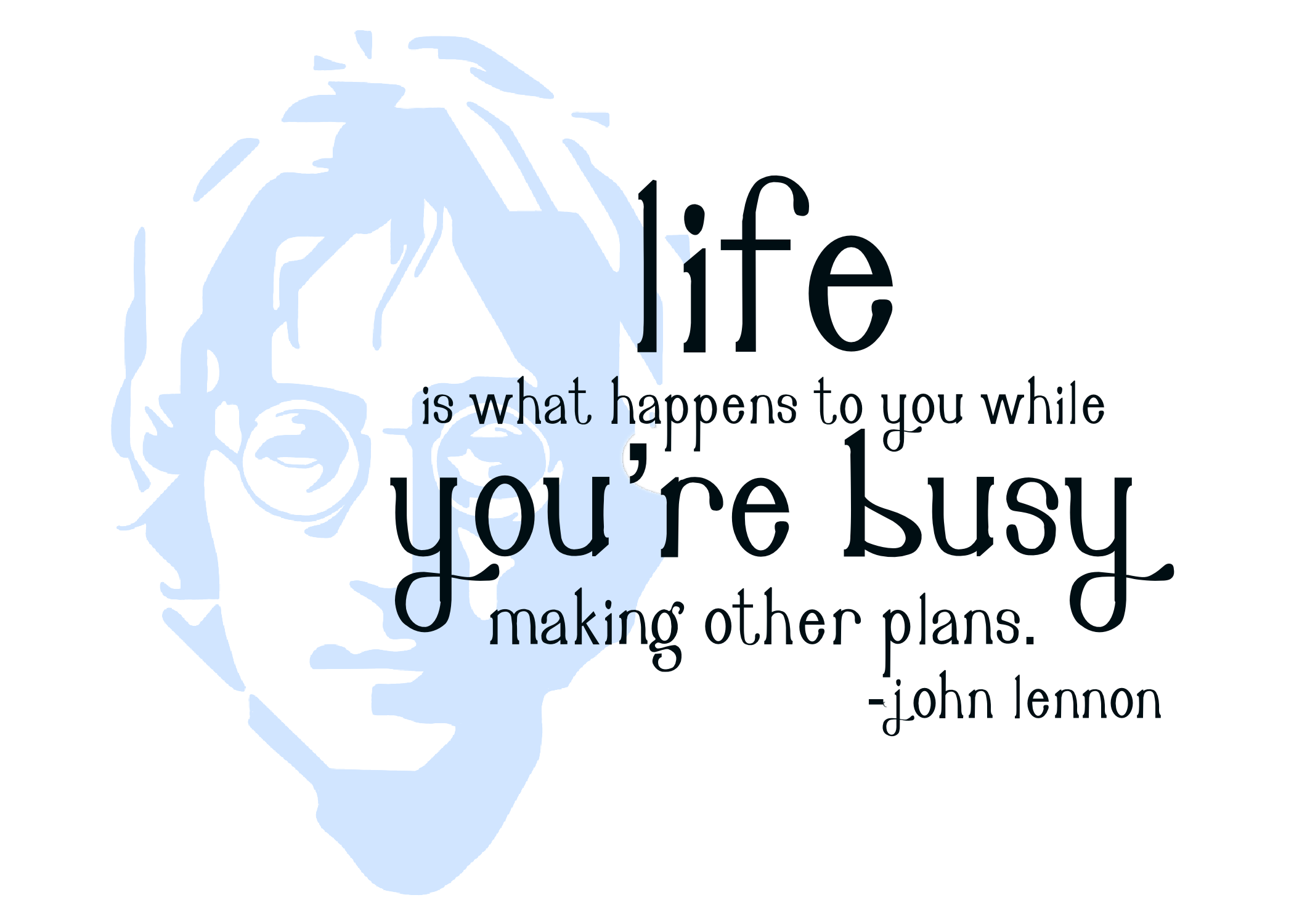
One of my favorite quotes is from John Lennon.

“Life is what happens when you’re busy making other plans.”

I’ve used this quote on many mentoring occasions and workshops over the years, but it means a lot more to me today than it ever has. I had no clue how much I was missing in life until I left my career of almost 28 years and took some time off.

Before I get there though, I want to say with full certainty that I can look back on my professional years and say I was successful. I’m proud of my accomplishments and have nothing but appreciation for all I’ve been a part of, all I’ve experienced and learned, and who I did it with. Without the experience, I certainly wouldn’t be the person I am today. I am grateful.

Over the last few months, it has been humbling to reflect on the privilege that has come with my professional success (e.g. the ability to take time off without having financial stress (a BIG one)). However, in an effort to learn and grow, the time has also provided me an opportunity to dig deeper into the costs of those accolades:

I was a workaholic and prioritized work over a lot of things. My excuse: It is easy to work your ass off when you’ve been taught to work your ass off, when you love what you do, and/or you love the company you do it for as much as I did.

The company’s needs and progression always felt more important than my own advancement. I always felt I owed the company more than I could ask for, so never asked for anything more than what it wanted to give.

My work family was unintentionally more important than my real family. While this isn’t true in my heart and mind, my actions over the years told a different story. I always had an excuse. People needed me, so I needed to do it. Whatever it was.

I was always quick to become a mentor and support others who were in pursuit of bigger and better things, but didn’t drive much of that same advice forward for myself. This led to some long and winding years, spending many of my days not enjoying my work nearly as much as I used to (and in some cases, not at all).

I thought I had really great work/life balance, but it was work/life integration that I had, emphasis on the “work” part. While I’m not against work/life integration, it wasn’t my company, it was someone else’s.

Other people’s happiness was always more important than my own. I felt an obligation to serve, no matter the cost.

Over the years, I only saw most of this in glimpses. And for every glimpse, I always knew there were changes I needed to make, but something else always came first. As they say, “time flies…”, then you realize that life IS what happens when you’re busy making other plans.

With all that said, I am one of those lucky ones. Most people don’t get the opportunity to voluntarily step away from a career and life’s shortcomings. On top of that, we often need something dramatic to happen in our lives for us to open our eyes. Even though we know something can be better, we tend to save it until tomorrow and of course tomorrow never really comes. We’ve all been there.

My explicit time away, along with the help of my life coach, DamiĆ”n (and a call-to-action), created space for me to engage and get lost in some reflection; exercises that very likely wouldn’t have hit home nearly as deeply had I done it when I was in the thick of things. In the process, I discovered ONE THING that changed everything for me.

I gave myself permission to let go.

I let go of the guilt, grief and anger I was feeling of leaving a company I cared about. I let go the feeling of being responsible for things I was not responsible for. I let go of the fear that I would be nothing if my name or face wasn’t connected to a company that the world loved. I let go of trying to be a super hero. I let go of the toxic people-related distractions in my life. I let go of the grasp that my past had on me and who it wanted me to be. I let go of mistakes of the past. I let go of the fear and uncertainty of not working (or even having a plan). I let go the pressure I was putting on myself to be busy. I let go of the things I know weren’t serving me in becoming a better version of myself.

And the learning was undeniable and valuable, especially for my future self:

  • I redefined what “quality time” meant with my wife and three kids. I’ve become more focused on bridging the gaps that existed, but I’m also paying attention to the little things in life in a much more authentic way.
  • I connected with myself on a much deeper level, finding ME versus a version of me who was directly tied to the work I did and/or the company I did it for.
  • I found a new and revitalized love for running and art, one that wasn’t driven from stress, anxiety, and/or connected to work in any way.
  • I learned how to be okay with slowing down a bit and being okay with quiet, which improved my mediation, my running AND how I look at the world.
  • I rediscovered that gratitude really does change everything. I started learning how to live in the moment, fully appreciating all that I do have RIGHT NOW and for all that I know and experienced up to this point.
  • I reimagined what happiness means to me and committed to “happiness over everything else” in the future. “Life/Work Harmony” is critical to my success.
  • Above all, while the path forward is still ambiguous and I still have a lot to learn and work on, I have a much clearer awareness and understanding of what I don’t want in life.

    I hope this inspires you to notice the things in your life that don’t feel right and prioritize working to make them better in the now. You, just like me, have full permission to do so.

    Gratitude.

    cp

    The Beginner’s Mind

    ā€œIn the beginner’s mind there are many possibilities, but in the expert’s there are few.ā€  ShunryÅ« Suzuki

    As runners, we all have at least one thing in common. We’ve all been THERE. A bonk at a race. A blister that stops us dead in our tracks. A sunburn that irritates us for days on end. Then there’s our all-time favorite, the injury that comes from doing too much, too fast or too soon.

    Without doubt, every single one of these shortcomings could have been prevented, but we are human and inevitably make mistakes, make flat-out dumb decisions, and/or blindly ignore the facts.

    We’ve also ALL been beginners. Beginners to running at one point or another and beginners to just about every other facet of our lives.

    I was reminded of what it was like to be a beginner many times over the last few months, but this story is not about me, it’s about a really really really fit friend of mine. I mean, really fit.

    Although my friend is no stranger to the gym and training, he never considered running to be part of his fitness routine, so running was never something he’s done seriously or paid attention to.

    Recently, he decided to take up running and invited me out. When he shared his new journey to becoming a runner, I learned he went from 0 to 24 miles in just the few days leading up to our running date. Instantly, ALL the warning lights went off on my mental dashboard. I tactifully warned him about all the negative outcomes that can potentially come from running that many miles in such a short period of time. I also warned him about the crappy, low-profile training shoes he was running in. He was quick to comment about how much he knew about his body and assured me that he was good to go. A few days later, we were supposed to run again when I got a somewhat predicted text – he was cancelling on me, complaining about his very very very sore shins and lower back and probably wouldn’t be running any time soon, if ever again.

    The conversation reminded me of the importance of “Shoshin“, a concept from Zen Buddhism that means ā€œbeginner’s mindā€. Shoshin refers to having an attitude of openness, eagerness, and lack of preconceptions when studying a subject, even when studying at an advanced level, just as a beginner in that subject would. This belief not only helps you see things with new eyes, but it also helps you see old problems from fresh perspectives.

    An open mind helps you better adapt, especially if there is ambiguity and uncertainty on the table.

    On paper, having a beginner’s or growth-mindset seems fairly straight forward and easy to execute, but of course reality throws us all kinds of curve balls, making it difficult to do it well all the time.

    Certainly my friend could have looked at running a bit differently from his normal training right from the get-go. He could have been more curious and more open to coaching. He could have used the learning to avoid inevitable pitfalls that beginners often face.

    Sometimes our past experiences and what we know (or think we know) can hurt us.

    Sometimes we just have to experience failure for ourselves to truly learn and grow.

    Sometimes the cost is too great and it pays to spend some time changing ourselves and how we see the world.

    The tricky part is that in order to change ourselves we need to change our practices, but doing that usually brings up some common types of discomfort, pitfalls, and risk (and very few of us actually like this kind of stuff). Having the awareness and understanding of what’s holding us back from changing is a vital component. The better we can do this, the faster we can create paths forward that can help us succeed in any idea or challenge we come across.

    Years back, I had a great coaching session with a mentor of mine, A.J. Pape, who shared some helpful information with me, so I’d like to share it with you.

    So, What Do Many Of These Common Pitfalls Look Like?

    The underlying assumption around the notion of being a “Beginner” is that human beings may have some more-fixed characteristics, but mostly we are a product of our current and historic practices (this fits with the Growth Mindset some of you probably know of). The tricky part is, to change ourselves, we need to change our practices, and changing practices usually brings up common types of discomfort or risk. The period where we know we want to change, and we take on new practices, is the period I refer to as being ā€œa Beginnerā€.

    What We Know About Being A Beginner

    We tend to underestimate how long it will take to build new competence.
    “I already tried this twice and it didn’t work, WHY IS MY LIFE SO HORRIBLE?!”

    We over-correct.
    For me, when I started to develop stronger boundaries and say No, my early No’s were really intense! I was over-correcting from my old habits of being too compliant.

    We fail at the new behavior, and we don’t like that.
    Staying on the “building my strong ā€œNoā€” example, I would continue to see times where I went along with something when I wanted to say ā€œNoā€. I experienced failure, and I didn’t like it.

    If the new behavior involves others at all, we can fear or experience embarrassment.
    Again, humans don’t like that. We’re evolved to fit in, to belong, so embarrassment can feel really threatening. 

    So tempting to give up and just keep the old behavior!

    If the new behavior is social, we can seem fake while we’re still Beginners.

    Active listening can seem fake when people first start practicing it. It can seem fake to others or to ourselves. 

    Again, the strong temptation for many of us when this happens is to give up and pull back to what we know. 

    And What Can We Do To Make It Through These Challenges As Beginners?

    Set low standards.
    Celebrate like crazy when you or someone you’re supporting makes an iota of progress.

    Ask for support from others.
    And make sure to specify what support looks like to you…

    Get a guide/friend/mentor/coach/teacher.
    Someone who’s a little or a lot further down the particular path you are starting down.

    Learn in a group with other Beginners.
    Surround yourself with committed learners than can help you normalize the discomfort and frustration of being a Beginner

    Establish simple, achievable practices, and keep practicing.
    Ask for feedback from people you trust. Don’t let YOUR automatic self-assessments convince you that you’re the Worst Person Ever or even a SUPERSTAR, get calibration from other people who can observe you in action.

    Stay connected to your WHY for building this new competence.
    You can never have too much connection to your Purpose. As an example, years ago I started teaching innovation classes. My background is much around teaching leadership and teamwork, so this was a new and different gig for me. I was a Beginner. And boy, did I not like getting the feedback that I needed to change some of my behaviors! As a leadership and teamwork Coach, I would ask deep inquiry questions that could leave the whole room silent for what seemed like a long time, and it was fine. Those silences helped people to reflect. But my innovation mentor didn’t want that, their workshops were intended to move quickly down defined paths and leave people with really concrete tools. They didn’t like my deep open questions! I found it really uncomfortable to get this feedback. Why, people come from miles around for my deep questions! I won the Deep Question contest at the County Fair! I’m awesome, don’t you know that?! These were my defensive reactions in the face of the failure in facilitating differently. Eventually I learned to ask tighter questions, to meet the different standards and purposes of my innovation client. I learned to embody the competence that was called for in that context. My point here is that the discomfort is to be expected, no matter how many other hills we’ve climbed or changes we’ve made. A new behavior is by definition something we’re not good at and for the most part, humans (including me) don’t like the feeling of not being good at stuff.

    Competence
    Competence as a lens for human behavior (versus fixed, inherent qualities). Want to know why someone did or didn’t do a certain thing? Consider competence. Were they competent to do anything other than what they did? If not, do they want to build a new competence? Etc… (Tends to work better than attributing negative motive, which most humans do automatically)

    Assessments
    Is competence something you can measure objectively? Nope. It’s an example of an assessment. I might assess you as competent at babysitting kids, but if my partner has different or higher standards than I do, their assessment might be different! 

    Embodiment
    What have you noticed about yourself when you’re a Beginner at something? How do you tend to navigate that terrain? What do you do that you find helpful, and what other behaviors might be automatic and less helpful when you’re a Beginner?

    My Path To Self-Discovery

    During my career break, I went on a personal development mission and discovered a new and improved version of myself. But I didn’t do it alone. I had the help of a mentor and life coach.

    Because it was so deeply impacting, I wanted to share the trigger discussion/exercises that my life coach, DamiƔn, used to help me in my path to self-discovery.

    ——-

    Coaching Design and Follow-up

    Hi Chris,

    I am happy and excited to be joining you on this journey of growth and development. I appreciate your candidness, honesty and curiosity. The quality that has really struck me is your deep compassion. I hear it come out when you talk about helping others and I see it in your eyes. I sense that this deep compassion comes from a place of love and care.

    I also sense that this capacity for deep compassion can distort itself in ways that don’t serve you well. You might be so focused on taking care of others that you repress your own need for care.

    The metaphor I see for your current way of being is that of a short order cook – you are cooking multiple dishes at once for the people that you love and the people that want your help. You are constantly tending to everyone else’s nourishment and are not focused on your own.. The new metaphor I invite you to step into is that of a Pilot – Getting yourself and others to the right destination. Pilots need to ensure they are nourished and supported to do their job. They need their tools and instruments to keep them on course, a co-pilot to help when they need a break and a crew to support them in their mission of serving the passengers.

    I can also see that busyness is highly valued by you and that some of your value comes from being busy. The story you might be telling yourself is that if I am not busy then I have no value. What happens if you are not busy? Can you have value and not be busy? Can you have value while doing nothing? Where does your true value come from?

    We’ve identified that the present issue in your life is to identify the next expression of yourself in life and in work. In your coaching, we will be focusing on the below goals. Your developmental outcomes are:

    • You are able to identify and express the full spectrum of your emotions
    • You are able to create space for and listen to your heart’s deepest desires
    • You are able to appreciate and enjoy life in its present moment

    These outcomes are aligned with the greater purpose of your coaching which is to have you walk through life with the calmness and conviction that comes from deeply knowing yourself.

    To get there, we will add practices into your daily life to cultivate new skills and a new way of being. The practices are:

    • Journal at end of each day – how did I take care of and nourish myself today?
    • 3 times a week do at least 30 minutes of yoga focusing on your body and breath in the present moment
    • Daily emotional check-in with wife using core emotions – mad, sad, glad, fear, shame
    • Bonus – meditate regularly

    Finally, I have an additional resource to help you in this new path. This link will take you to an overview of core emotions and how they combine and interact to create our emotional landscape. The article focuses on disgust instead of shame. I invite you to explore shame over disgust as it is a feeling that, in my judgment, comes up more often.

    Let me know if you want clarification on anything or if you want to modify anything that isn’t resonating.

    With love and gratitude,

    DamiƔn

    Easy Doesn’t Have To Be

    Ragnar Relays are certainly my idea of a good time.

    Picture six friends in one van for a day and a half. Excitement is in the air as we laugh and chat, as we challenge ourselves and cheer each other on. We share every bit of personal space and all the sweat and smells that come with it. We deal with the ups and downs that only reveal themselves when every one is sleep deprived, hangry, and drained from running three times over the span of the race.

    Needless to say, there are a lot of stories to be shared from countless Ragnar experiences, many of which I’m sure will be shared in this space at one point or another.

    One of those memories popped in to my mind during a recent “easy” run.

    Once upon a Ragnar planning meeting, my team was choosing which segments each of us would be running, when a friendly argument broke out about the runs themselves, which were classified by Ragnar as easy, intermediate, or hard.

    The problem: No one was really interested in doing the “easy” legs because we had a fairly competitive team; a bunch of show-offs really. šŸ˜‰

    However, a mentor of mine, Joel, had a different persepective:

    “Just because a run is classified as easy, doesn’t mean you can’t push yourself and make it more challenging.”

    Joel’s reflection resonated deeply with me. Not only did it change how I viewed running easy legs, but it also shifted how I looked at personal growth and business.

    1. Just because it’s easy, doesn’t mean we should always treat it as so. If we’re not challenging ourselves, we’re not learning and growing.

    2. Always choosing the same path, or doing the same things over and over again, doesn’t allow us to imagine or create new opportunities. It steals our ability to innovate and evolve.

    3. Realizing, even if/when things are going well, there are ALWAYS improvements we can make to better ourselves, the people around us, and our current environments.

    4. If we’re not looking at our worlds, our ideas, our businesses, our relationships, our problems and opportunities – at anything really, with new eyes and open-mind, it’s likely we may never find the things that make us intrinsically happy and fulfilled.

    Questions We Can All Ask Ourselves

    We don’t have to let another day go by without triggering some ideas and a call to action that can help create a better world for ourselves and others.

    How can I think differently about ________________?

    What is one thing I can do differently that can better ________________?

    What is one thing I can do, right now, that can start me down this path?

    Remember, one action leads to another. With enough completed actions, you have momentum.

    May The Cairns Guide Your Journey, Or Not…

    If you’re hiking or running on a remote trail, it’s likely you’ll come across some rocks stacked on top of each other.  These formations are called cairns.  The word comes from the Gaelic for ā€œheap of stonesā€ and in their simplest form, cairns mark the route of an ungroomed trail.  These rocks can be a life-saver, especially if you’re unfamiliar with a trail.

    From experience, it’s easy to veer off-course on the steep back half of Black Mountain’s, 404 north loop.  Until recently, it’s not exactly the most well-groomed trail this time of year and has the tendency of disappearing as quickly as it can reappear.  Cairns are a big help, but they don’t always to come to the rescue when you need them most, leaving you a little nervous and confused.

    These moments take you out of your comfort zone, but also to a place where we learn most about ourselves and our journey.

    Even when you have a clear objective (in this case, getting to the peak), there aren’t always going to be cairns that mark your way.  The same holds true in business – the path to success isn’t always clear, even if we know exactly where we want go.  When we deviate from the beaten path, it’s sometimes necessary to re-track our steps and get back to a clearer trail, but there are also times when the only way we can progress is to forge a new path forward, even if it’s uncertain, uncomfortable, and hard.

    Being Comfortable With The Uncomfortable

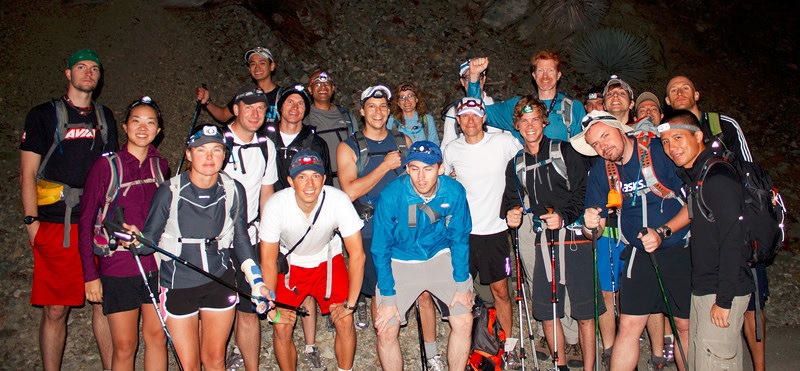
    Every March, my former colleagues and I would get together to start training for the 8,000 Meter Challenge. The 8000MC is the ultimate outdoor industry event that takes place the first week of every September. The participants are employees from outdoor specialty stores that team up with their colleagues to climb Southern California’s three highest peaks in one day, roughly 40 miles and almost 12,000 feet of elevation gain.

    The event is special to me and holds a deep place in my heart for two reasons.

    The first is pretty obvious. I love being on the trails and putting myself through a mental and physical challenge. The event always brought me closer to the people I worked with, no matter how we performed. The 8000MC made us a closer, stronger, and better team, both on and off the trail.

    Zappos’ 2011 8,000 Meter Challenge Team

    The second reason is because of a mentor and the founder of the event, Mark Fulton. Mark’s gift was his magnetism. People were naturally drawn to his energy, his passion, and his smile. His life mission was to ensure that every day was an adventure, not just for himself, but for everyone around him. He inspired people to be better, simply because he was always striving to be better himself.

    Mark was an early mentor for me in the retail business. He was a man of his word and always led by example. He always left his door open and I always seemed to take him up on the offer, seeking his perspectives on many occasions. His words were often meaningful and constructive, but the thing I valued most, and the one thing you could always depend on him for, was his radical candor. His advice was never sugar-coated.

    A phrase that I heard regularly from Mark, whether taking chances on buying product or suffering (yes, suffering) out on mountain hikes and runs, was ā€œbe comfortable with the uncomfortableā€. Mark always tested the limits in everything he did and motivated everyone around him to do the same. He was, and still is, a true inspiration to me.

    The news of my friend Mark Fulton passing in April 2011 was a hard blow for me. He passed from congestive heart failure due to a rare blood disease, amyloidosis. Mark was just 55 years old.

    I was reminded of him this morning when chatting with a friend about a challenge he was going through. I found myself giving some of the same advice Mark would give me about ā€œbeing comfortable with the uncomfortable.”

    “Be comfortable with the uncomfortable.” – Mark Fulton

    In life, we constantly battle complexity, uncertainty and stress related to the problems we face. Sometimes we’re ready for the challenge, but all to often we find ourselves wanting to crawl under a rock to get away from it all. It doesn’t have to be that way.

    Six Pointers That Could Help

    Clear The Ole’ Noggin

    When it all gets to be tooo much, break away. I run, bust out my sketchbook, or meditate. I may go for a walk between meetings or just sit back and look out the window, taking some deep breaths for a few minutes. You’ll be amazed how much the simple act of stepping away from the chaos for a brief moment can help you get through the rough of it.

    Write

    I’m not the best at it, but it helps me get stuff out of my head. Writing releases my anxieties and the pressure. It helps me build clarity around what I’m thinking and it helps me communicate it to others. Damn. That feels better already!

    Embrace and Drive It

    Being fully immersed in a complex environment or challenge could be extremely stressful and ambiguous, but it can also turn out some of life’s biggest rewards… but only if we’re committed to making it work. So look at your challenge head on, acknowledge it and learn more about it. Once you understand it better, you’ll be able to focus on it in a more constructive way.

    Seek Some Help

    Share the burden of your experience with others. Your family and friends, your team at work, your mentors, your social community, heck, even complete strangers can be helpful. Don’t believe that you HAVE to do this all by yourself. Seek the perspectives of others; get some new angles on the challenge; ask questions… Going through the experience with others is always more beneficial than doing it on your own.

    Celebrate The Small Wins

    Sometimes we get so wrapped up in the day-to-day of things, making it hard to step back and realize what we’ve accomplished. A string of small wins all tied together equal momentum and/or big successes. Do yourself a favor and celebrate the small things along the way. At the very least, it will give you a dose of happiness and make you feel better!

    Share Your Story With Others

    Storytelling is one of the strongest forms of communication. Share your wins. Share your struggles. Share your experiences and lessons. Make your learning everyone else’s learning and through the process, you’ll open your mind even more.